About
CUSTOM MANUFACTURING AUTOMATION
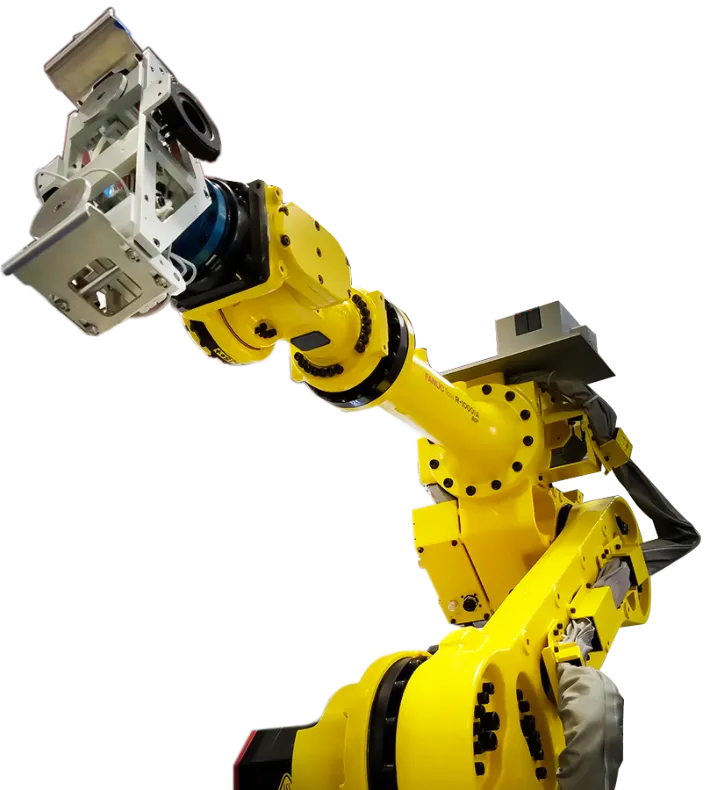
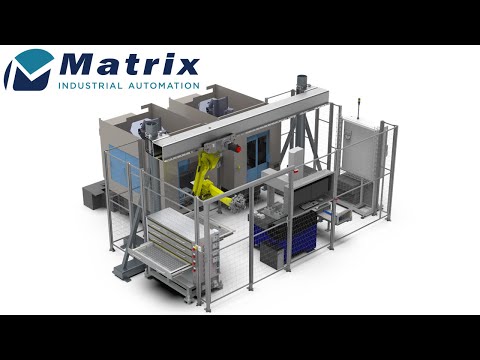
Matrix designs and integrates custom automation and engineered manufacturing systems for companies running complex manufacturing processes that have not been automated before. These projects are often first of their kind, where uncertainty is high and standard equipment will not meet the requirements. Matrix brings engineering rigor, validation, and practical integration experience to turn challenging manufacturing operations into stable, repeatable, production-ready automated systems.


WHY AUTOMATE YOUR SYSTEMS?
Engineered manufacturing systems are typically driven by a specific constraint that standard equipment cannot solve. Matrix supports programs where teams need to reduce risk while implementing a new capability.
WE HELP SOLVE YOUR MOST FREQUENT CHALLENGES:
- A manual process is limiting throughput, consistency, safety, or capacity—often relying on manual skill, tribal knowledge, or operator judgment—and no standard automation solution exists
- Part variation, geometry, or access constraints make automation difficult without custom fixturing and sensing
- Quality requirements demand integrated verification, sensing, data capture, and documented process execution to improve quality and reduce rework
- Cycle time targets and throughput requirements exceed what manual operations can sustain, requiring a multi-step cell that combines handling, processing, and inspection
- Labor availability and ergonomics require eliminating repetitive manual work while improving consistency and cycle time predictability
- Launch risk and technical uncertainty require a disciplined approach to prove feasibility through structured prototyping and validation before full deployment
- Deliver maintainable systems with practical access, clear recovery procedures, and robust fault handling
- Integrate automation into existing lines without disrupting upstream and downstream operations
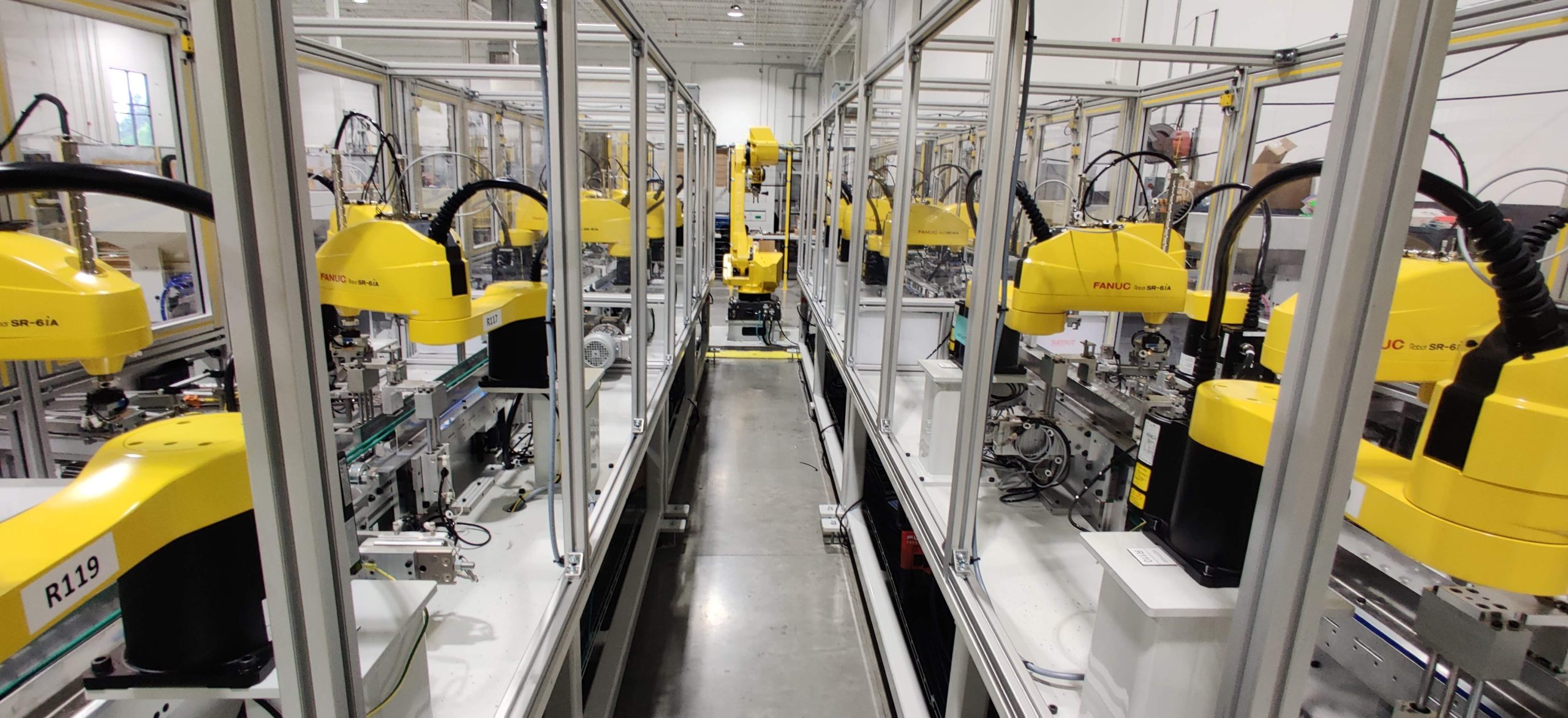
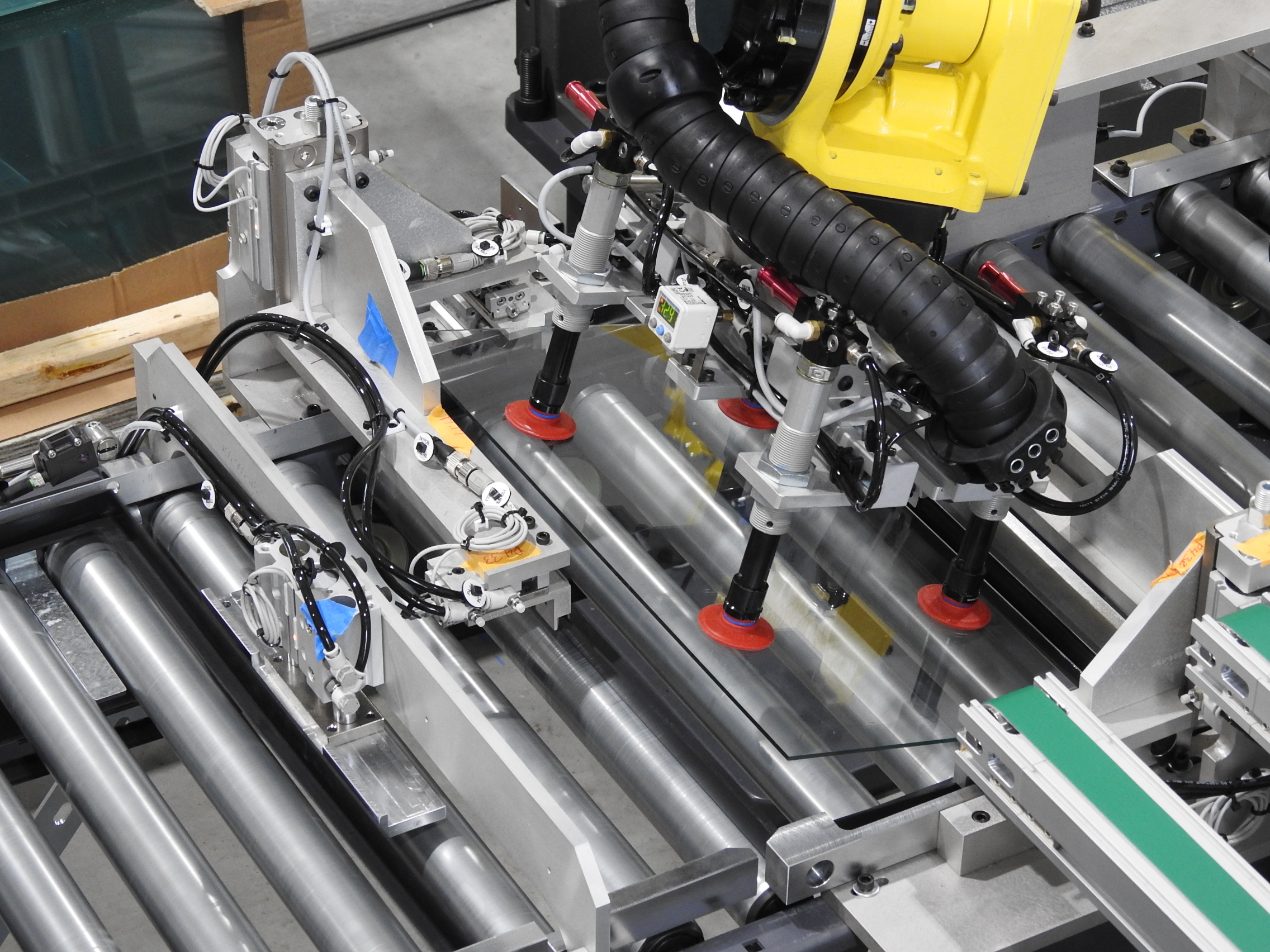
PARTS AND PRODUCTS WE COMMONLY WORK WITH
Custom automation is typically built around parts or products that are difficult to handle, difficult to verify, or difficult to process consistently. Common examples include:
- Precision-machined components and repeatable part families
- Castings, structural components, and fabricated assemblies
- Consumer product assemblies, housings, and packaged goods
- Packaging formats such as food cases, cartons, trays, pouches, totes, and custom carriers
- Kitted sets and subassemblies requiring verification and controlled sequencing
- Components requiring controlled orientation, sensitive handling, or tight process windows
INDUSTRIES SERVED WITH CUSTOM AUTOMATION
We deliver engineered manufacturing systems across industries where quality, consistency, and uptime are critical, including:
Applications
Core Capabilities
Matrix custom automation and engineered manufacturing systems commonly include combinations of:
- Robotic assembly and sub-assembly automation
- Robotic machine tending for CNC, presses, and secondary machining operations
- Custom material handling and part presentation systems
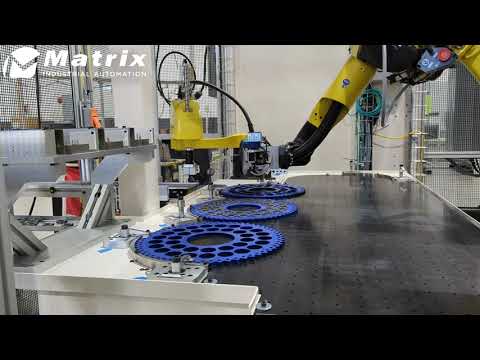
- Metal finishing and material removal processes, including deburring, grinding, and edge prep
- Secondary and tertiary packaging, case packing, palletizing, and stretch wrapping
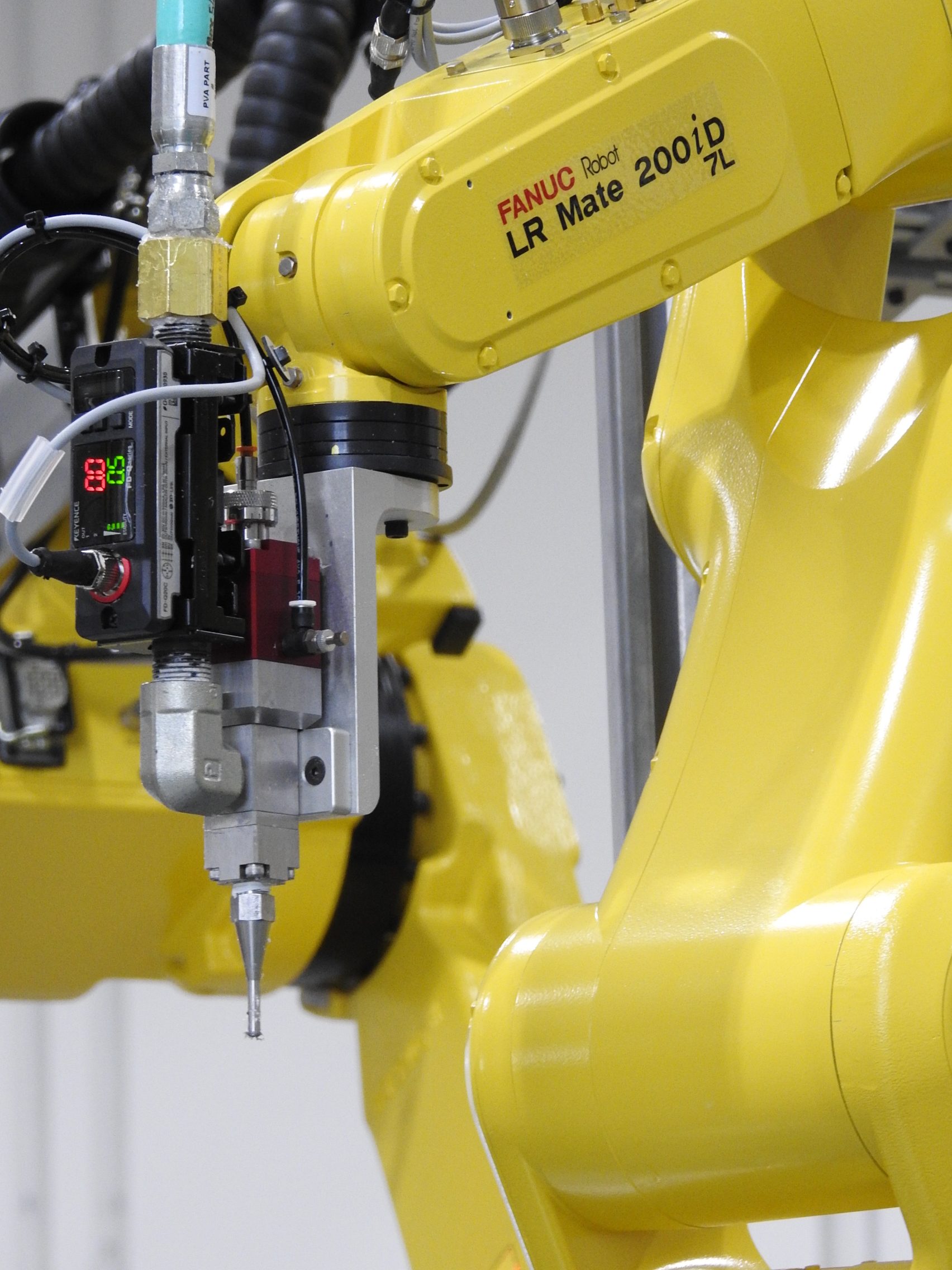
- Dispensing processes, including adhesives, sealants, lubricants, and other materials
- Inspection and verification using vision, gauging, and sensor-based checks
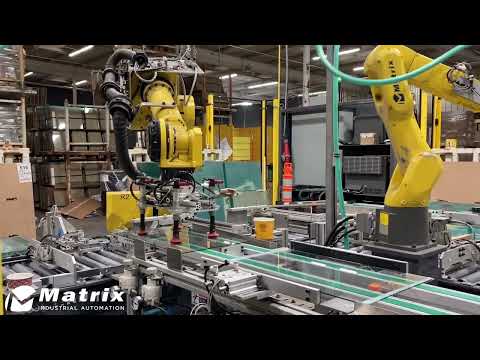
- Conveyor integration, accumulation, merges, transfers, and flow control
- Recipe management, controls integration, and plant connectivity for reporting and traceability
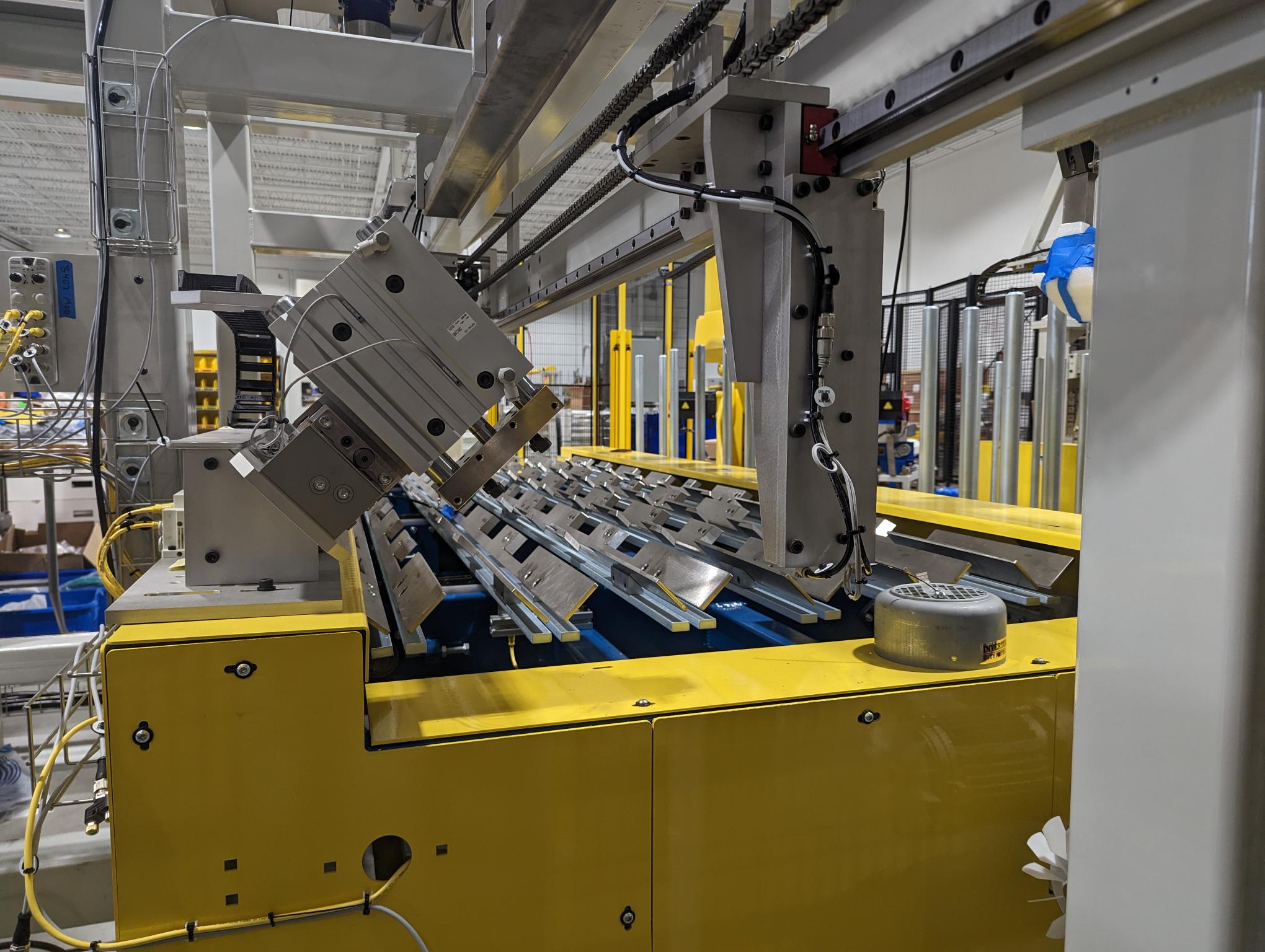
Typical System Building Blocks
Complex engineered manufacturing systems often combine multiple functional blocks into a single cohesive cell or line. Matrix frequently integrates:
- Part presentation and fixturing: custom nests, pallets, carriers, and locating strategies for repeatable orientation
- Robotic manipulation: multi-axis handling and tooling designed for inertia limits, reach, and cycle time
- Process modules: assembly steps, dispensing, material removal, fastening, or joining operations
- Verification and quality gates: vision, probing, sensing, and rule-based checks to prevent defects from passing forward
- Material handling and routing: conveyors, indexing, buffering, and transfers to maintain stable flow
- Controls and operator workflows: recipe selection, HMI design, fault recovery routines, and safe operator interaction
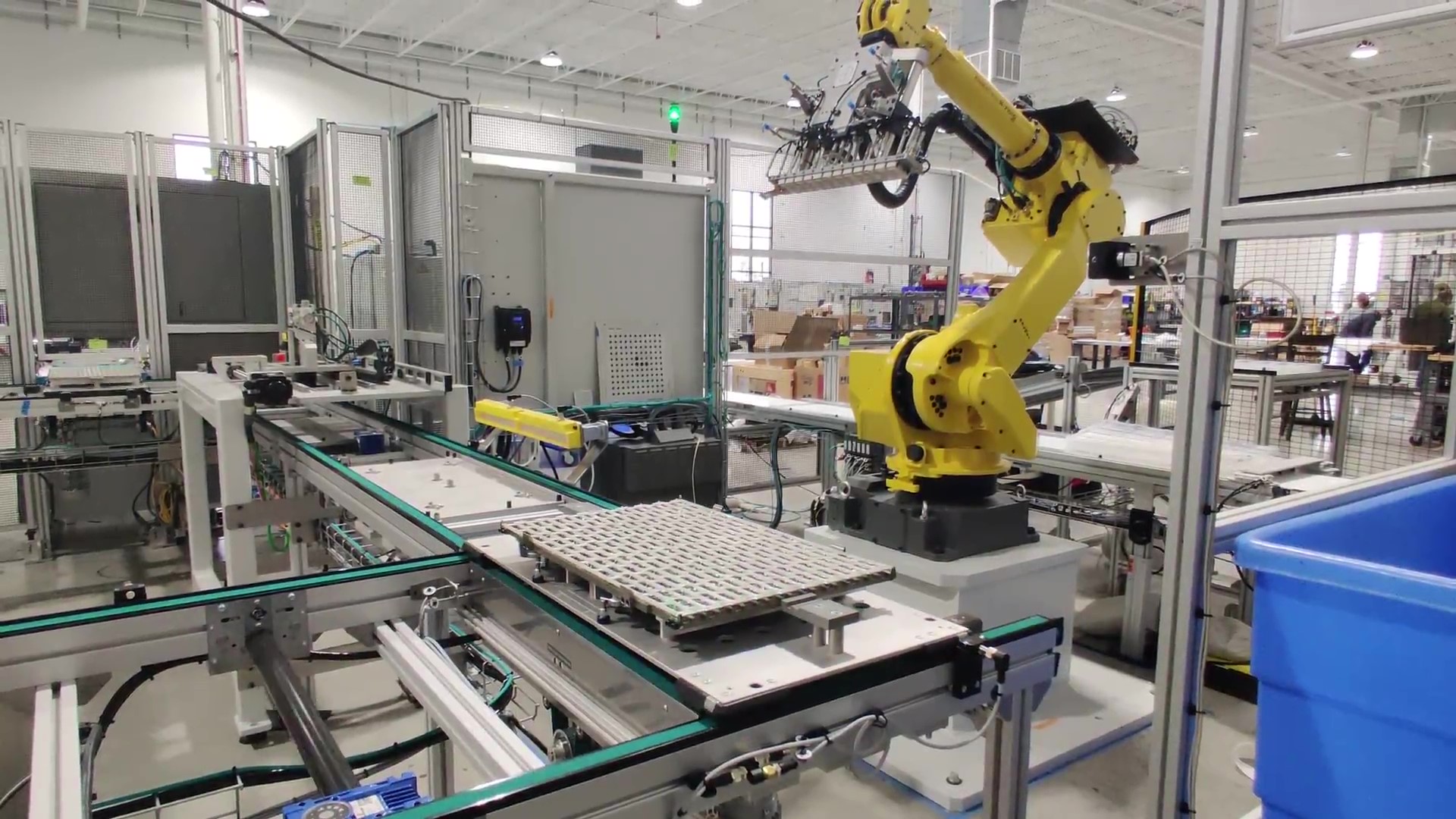
How Matrix Approaches Custom Automation
Matrix reduces risk on complex custom automation programs by structuring work around validation and measurable outcomes rather than assumptions. Typical approach elements include:
- Early feasibility work to confirm process physics, cycle time validation, and part variation identification
- Tooling and process trials to identify repeatable methods and acceptable parameter windows
- Design for maintainability with accessible change parts, service zones, and straightforward troubleshooting
- Controls logic built around predictable recovery, exception handling, and clear operator prompts
- Installation plans that support disciplined ramp-up and stable handoff to operations
Free Evaluation
Free Automation Evaluation Process
Have you ever thought about automating but weren’t sure where to start?
Contact us to go through our completely free Automation Evaluation Process.
By the end of this proven process, you will have a better understanding of how and where automation could fit into your current manufacturing operations.
Contact us to start your free Automation Evaluation Process!
Customer Stories
Better Service Starts Here
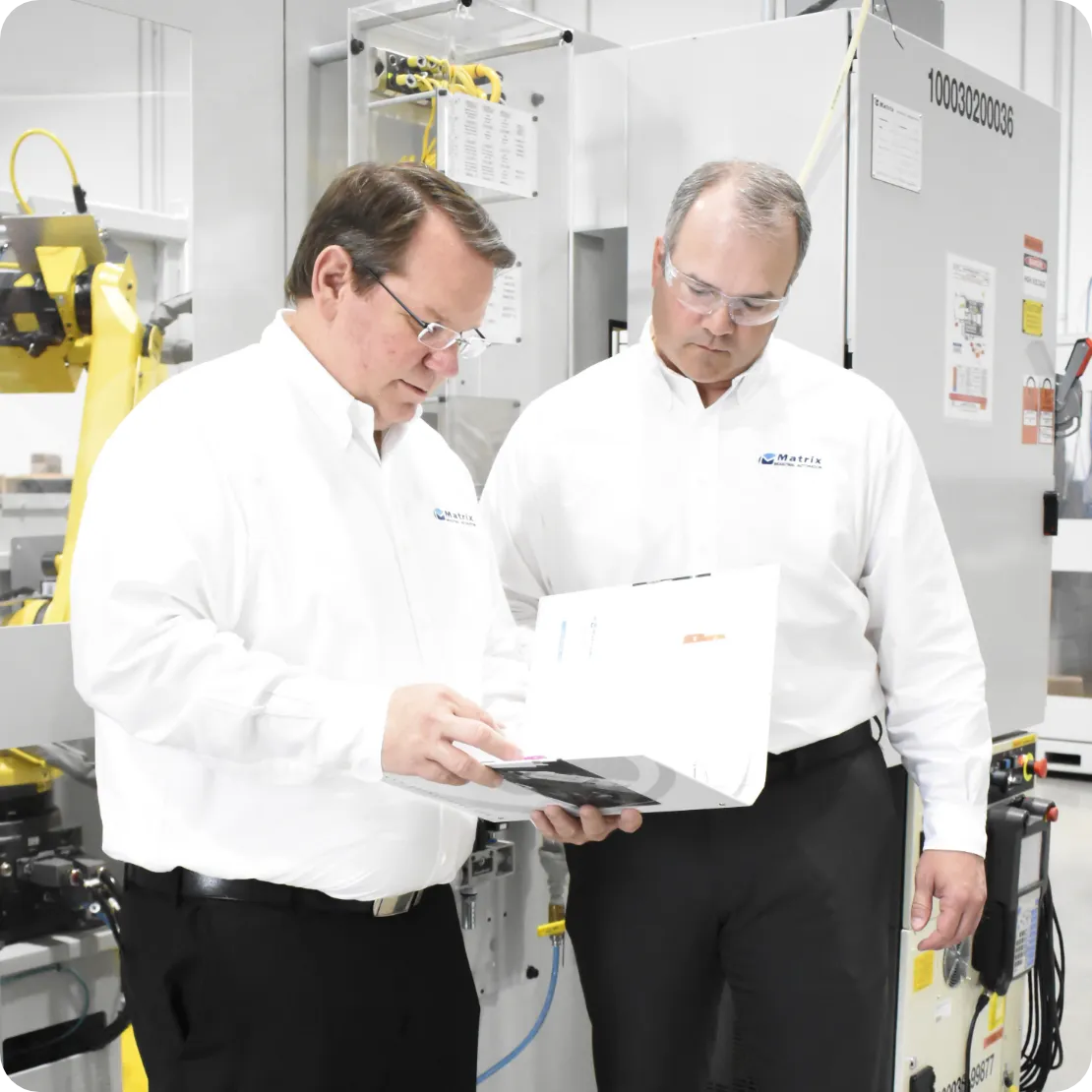
As a Level 4 Fanuc Servicing Integrator, Matrix has the ability to work on any Fanuc robot system for emergency service, spare parts, or reprogramming needs.